
NEW WINGS THERAPY
What is Play Therapy?
Play therapy is a therapeutic approach that uses play as a natural medium for children to express themselves, process experiences, and develop healthy coping skills.
The Power of Play
For children, play is more than just fun—it's their natural way of communicating, learning, and making sense of the world around them. When words aren't enough, play becomes a powerful language.
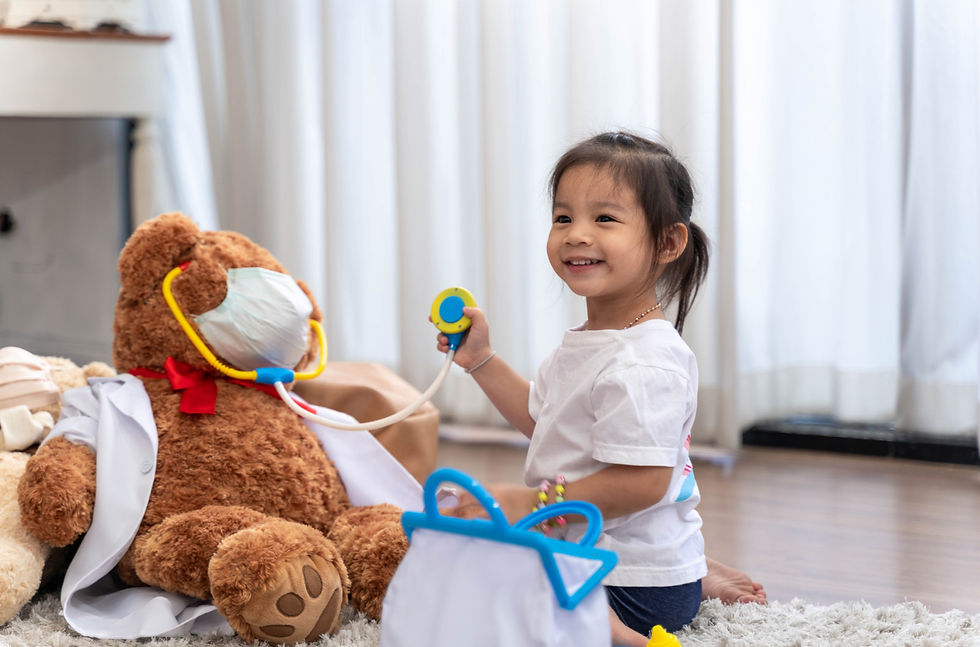
In play therapy, trained therapists use sensory materials, art, music, dress ups, puppets, toys, sand tray and games to help children explore their feelings, work through difficult experiences, and develop problem-solving skills in a safe, supportive environment.




How it Works
During play therapy sessions, children are given the freedom to explore, choose their preferred activities and express themselves at their own pace. The therapist observes, reflects, and gently guides the child through their emotional journey.
Through this process, children learn to understand their emotions, build self-confidence, improve communication skills, and develop healthier ways of relating to others and managing challenges.
How Play Therapy Can Help
Play therapy can help children navigate a wide range of
emotional and behavioral challenges.

Emotional Difficulties
-
Anxiety
-
Low mood
-
Depression
-
fears
-
Low self-esteem
Behavioural Challenges

-
Anger
-
Aggression
-
Defiance
-
Withdrawal
-
Regression
Early
Experiences

-
Birth trauma
-
Abuse
-
Neglect
-
Attachment difficulties
Family
Changes

-
Separation
-
Divorce
-
Blended families
-
Domestic conflict
Social Struggles

-
Peer pressure
-
Bullying
-
Social skills
-
Isolation

School Related Stress
-
Transitions
-
Academic challenges
-
Exam pressure

Physical symptoms
-
Headaches
-
Stomach aches
-
Sleep issues
Identity Issues
-
Body image
-
Confidence
-
Self-esteem
-
Sense of self


-
Navigating ADHD
-
Autism
-
Sensory issues
Neurodiversity

Grief & Loss
-
Bereavement
-
Significant life changes
-
Accidents
-
Medical
-
Frightening events
Trauma

Benefits of Play Therapy For your Child
Play therapy offers numerous benefits for children's emotional growth and well-being. It is suitable for children of various ages and developmental stages.

Healing from
Trauma
Play therapy provides a safe space for children to process and heal from traumatic experiences.
For children who have experienced traumatic events, play therapy offers a gentle and indirect way to process their experiences. By re-enacting or symbolizing traumatic events through play, children can gain a sense of control, reduce anxiety, and integrate their experiences in a way that promotes healing and reduces post-traumatic stress symptoms.
For: Children who have experienced abuse, neglect, loss, natural disasters, or other significant traumatic events.

Improved Problem-Solving Abilities
Play therapy helps children develop creative solutions and critical thinking skills.
Within the therapeutic play environment, children naturally encounter situations that require them to think creatively and find solutions. Whether it's building a structure, resolving a conflict between toy characters, or navigating a game, play therapy fosters critical thinking and adaptive problem-solving skills that transfer to real-life challenges.
For: Children facing behavioral challenges, academic difficulties, or those needing to develop coping strategies.

Increased Self-Esteem
& Confidence
Children develop a stronger sense of self-worth and confidence through empowered play.
In play therapy, children are given autonomy and a sense of mastery over their play world.This freedom to choose, create, and succeed in their play activities builds a strong sense of self-worth and competence. The therapist's unconditional acceptance further reinforces a positive self-image, helping children feel more confident in themselves and their abilities.
For: Children struggling with low self-esteem, shyness, perfectionism, or those who feel inadequate.


Improved Behavioural
Regulation
Strengthened Social Skills
Enhanced Emotional Expression
Children learn to manage their impulses and develop more positive behaviors.
Play therapy helps children understand the consequences of their actions and develop self-control. Through structured play and therapeutic interventions, children learn to identify triggers for challenging behaviors, practice alternative responses, and develop strategies for managing impulses, leading to more adaptive and positive behaviors at home and school.
For: Children exhibiting aggressive behaviors, defiance, hyperactivity, or difficulty following rules.
Children learn and practice essential social skills like sharing, empathy, & communication.
Through interactions with the therapist and sometimes other children in group settings, play therapy offers opportunities to practice and refine social skills. Children learn about sharing, cooperation, empathy,communication, and conflict resolution in a low-pressure, supportive environment, improving their relationships with peers and family.
For: Children with difficulties making friends, those who are shy, or children with diagnosed social communication disorders.
Children learn to safely express and understand their feelings through play.
Play therapy provides a safe and non-verbal outlet for children to express complex emotions they may not be able to articulate with words. Through toys, art, and imaginative play, children can act out feelings like anger, sadness, fear, and joy, leading to better emotional understanding and release.
For: Children struggling to verbalize their emotions, those experiencing anxiety, sadness, or anger.